Understanding online accessibility and SEO
When a guest searches for your tour, attraction, region or small business, online accessibility often decides whether they stay on your site or click away. If your website, booking engine or digital content is hard to find, hard to use or hard to trust, many will abandon the process long before they ever reach your front door (Domínguez Vila & Darcy, 2025; Fernández-Díaz, de Matos, & Correia, 2024). Online accessibility is about ensuring everyone can access and act on your information, including visitors living with access needs, older visitors, and time-poor planners using mobile devices and assistive technologies such as screen readers or magnifiers (Laverick & Awad, 2025; Lieke, 2020).
For tourism operators and small businesses, the opportunity is two-fold. When you align online accessibility with search engine optimisation (SEO) best practice, you increase your visibility in Google, improve user experience, and tap into a rapidly growing accessible tourism market segment that is already known to stay longer and spend more when information is trustworthy (Fernández-Díaz et al., 2024; Domínguez Vila & Darcy, 2025). In Institute of Excellence programs, operators who implement basic accessibility and SEO improvements consistently report clearer enquiries, fewer frustrated emails, and stronger organic traffic.
In this blog, you will learn 10 evidence-based ways online accessibility strengthens performance, grounded in current research and real-world examples you can apply immediately. You will see how accessibility, usability and SEO work together, where tourism and wider business and organisation websites typically fall short, and what practical steps you can take this quarter to improve your digital presence without needing to rebuild everything from scratch (Lieke, 2020; Fernández-Díaz et al., 2024).
Online accessibility in plain language
Online accessibility means your digital content (website, apps, PDFs, booking forms, social media) can be perceived, understood and used by people with different disabilities, with or without assistive technologies (Laverick & Awad, 2025; Lieke, 2020). The Web Content Accessibility Guidelines (WCAG) summarise this in four principles: perceivable, operable, understandable and robust (Fernández-Díaz et al., 2024; Lieke, 2020).
For a tourism business, this might include:
- Text that can be resized on mobile without breaking your layout.
- Alt text on room, trail or vehicle images that describes what guests will actually experience.
- Keyboard-accessible menus and forms for people who cannot use a mouse.
- Use clear headings, link labels, and a logical structure so both screen readers and search engines can navigate your content (Lieke, 2020; Laverick & Awad, 2025).
In practice, improving online accessibility often comes down to improving basic clarity and structure. That is why many accessibility fixes deliver simultaneous SEO and usability wins (Lieke, 2020).
How search engines and AI see your site
Search engines and AI systems don’t view your pages like a human; they read the underlying structure and text. They depend on your headings, titles, descriptions, links and on-page copy to understand what a page is about and when to show it in search or AI-generated answers (Lieke, 2020).
Current evidence on optimisation shows that:
- On-page elements such as heading structure, title tags, meta descriptions, URLs and internal links are still core signals for how content is classified and ranked (Lieke, 2020).
- Fast, mobile-friendly, easy-to-use sites are favoured because they deliver better overall experience, which aligns closely with accessibility best practice (Lieke, 2020).
- Consistent visibility in both search results and AI outputs depends on high-quality, relevant content published on technically sound, standards-aligned sites, not on shortcuts or “black hat” manipulation (Lieke, 2020).
This is where the synergy lies: the same choices that make your content accessible also make it easier for search engines and AI models to crawl, interpret and surface your pages when visitors are searching for what you offer.
10 evidence-based ways online accessibility boosts performance
These 10 evidence-based practices show that online accessibility is not just about compliance; it is a strategic growth lever for your business. By making your digital channels easier to find, understand and use for visitors and customers with diverse access needs, you expand your market, strengthen your search performance, and improve every stage of the visitor journey, from inspiration and research through to booking and advocacy (Lieke, 2020; Domínguez Vila & Darcy, 2025; Fernández-Díaz et al., 2024).

Man with Visual Impairment Relaxing with a Drink at a Holiday Resort
1. Larger, higher-value customer base
People with disabilities already represent around 15–16 per cent of the global population, and that share is growing as populations age (Fernández-Díaz et al., 2024; Makharashvili, 2025). When you include older travellers, families with prams, and people with temporary impairments, at least a third of potential visitors benefit directly from accessible digital information (Domínguez Vila & Darcy, 2025).
Studies in accessible tourism show:
- Visitors with access needs and their companions make up a substantial, growing market with a significant economic impact (Fernández-Díaz et al., 2024; Domínguez Vila & Darcy, 2025).
- Many will travel more often, stay longer and spend more when they can find detailed, trustworthy access information online (Domínguez Vila & Darcy, 2025).
For your business, every improvement in online accessibility expands your reach and increases the overall value of your potential customer base.
Action example: Add a clearly visible “Accessibility” or “Access needs” section in your navigation and ensure it details access across parking, paths, entrances, rooms or tours, toilets and emergency procedures (Domínguez Vila & Darcy, 2025).
2. Strong alignment with on-page SEO best practice
A comprehensive study of accessibility, usability and SEO found strong overlaps between accessibility techniques and on-page ranking factors (Lieke, 2020). Specifically, the following practices support both:
• Semantic heading structure (H1–H2–H3) that reflects page hierarchy.
• Descriptive link text instead of “click here”.
• Alt text for images and captions for video.
• Logical internal linking and sitemaps. These elements help assistive technologies interpret your pages and simultaneously help Google’s crawler understand topic relevance and structure (Lieke, 2020).
In IOE training, operators often discover that when they fix heading levels, tidy up link text and add meaningful alt text, their core pages begin to climb in search results without additional ad spend.
3. Better user experience for everyone
Accessibility improvements benefit all users, not only those with disabilities. Research shows that more accessible websites tend to be more usable overall because they promote clarity, consistency, and effective information architecture (Bai et al., 2019; Lieke, 2020).
The relationships look like this:
- Accessibility features such as clear headings, labels, and navigation improve perceived usability for all visitors (Bai et al., 2019).
- Better information architecture (how content is grouped, labelled and linked) supports both findability and accessibility (Lieke, 2020).
In practice, this means fewer confused emails, fewer phone calls asking where to park or how to access a site, and smoother online journeys for first-time visitors.
Action example: Choose one key booking pathway (“book a tour”, “book a room”) and walk it yourself on mobile using only the keyboard (tab + enter). Note every step that feels confusing, hidden or requires too much guesswork, then simplify labels and navigation.
4. Higher trust and conversion through better access to information
A global study of 198 national tourism organisation websites found widespread gaps in access to information across the whole tourism value chain, including transport, accommodation, attractions and services (Domínguez Vila & Darcy, 2025). Typical problems included:
- No dedicated or easily discoverable accessibility section.
- Vague terms such as “wheelchair friendly” instead of specific dimensions or features.
- Out-of-date or contradictory information (Domínguez Vila & Darcy, 2025).
Separately, research on digital accessibility in tourism highlights that reduced information quality (relevance, accuracy, completeness) erodes confidence for travellers living with disabilities (Fernández-Díaz et al., 2024). Empirical testing by Lindgren (2024) confirms this link, demonstrating that an accessible website redesign led to a statistically significant increase in purchase intentions. The study found that accessibility features improved the perceived ‘Information Quality,’ giving users the autonomy and trust required to commit to a purchase.
For your business, detailed, accurate access to content:
- Reduces uncertainty and perceived risk.
- Increases the likelihood visitors will complete a booking rather than abandon and look elsewhere (Domínguez Vila & Darcy, 2025).
Action example: Replace generic statements like “accessible bathroom” with measurable information (door width, step-free shower, grab rail locations, circulation space) and add supporting photos with descriptive alt text (Domínguez Vila & Darcy, 2025).
5. Improved search rankings through social inclusiveness
Lieke’s thesis introduces “social inclusiveness”, the combination of accessibility and usability, and demonstrates that websites with stronger information architecture and accessibility tend to perform better in search rankings (Lieke, 2020).
Key findings include:
- Sites with clear structure, headings, accessible navigation and descriptive labels scored higher in Google Lighthouse audits for both accessibility and SEO.
- Combining accessibility and usability consistently correlated with better performance than implementing either in isolation (Lieke, 2020).
This supports an important mindset shift: investing in inclusive design is not a “nice to have” separate from marketing. It is part of how you compete for visibility in search.
6. Better analytics and continuous improvement
Research into SEO and digital visibility emphasises that sustainable performance depends on continuous measurement and refinement (Lieke, 2020; Fernández-Díaz et al., 2024).
Specifically in tourism, digital accessibility studies increasingly use:
- Automated tools (for example, Lighthouse, TAW, AccessMonitor) for baseline checks.
- Structured audits across channels (web, apps, PDFs, social media).
- Segmentation of traffic and behaviour for pages containing accessibility content (Fernández-Díaz et al., 2024; Lieke, 2020).
For a small business, you can mirror this at a practical level by:
- Tracking organic traffic, bounce rate and conversions for your accessibility page and key product pages.
- Noting whether changes (for example, improved headings, faster pages) correspond with better engagement and enquiries (Fernández-Díaz et al., 2024).
This turns accessibility from a one-off project into an ongoing capability that supports both guest experience and marketing ROI.
7. Reduced legal and reputational risk
Global regulations are rapidly tightening around digital accessibility. Recent work summarising European and international frameworks notes that businesses are expected to follow WCAG 2.1 Level AA as a baseline, with the European Accessibility Act and similar laws introducing penalties for non-compliance, including fines and, in some jurisdictions, potential criminal liability (Laverick & Awad, 2025; Fernández-Díaz et al., 2024).
For tourism operators and small businesses, the bigger risk is often reputational. Research on accessible tourism highlights that poor or misleading online access information undermines trust with travellers living with disabilities and their networks, who rely heavily on word-of-mouth and peer recommendations (Domínguez Vila & Darcy, 2025; Fernández-Díaz et al., 2024).
By proactively improving online accessibility, you:
- Reduce exposure to complaints or negative publicity.
- Demonstrate corporate social responsibility and alignment with the UN 2030 Agenda on reducing inequalities (Fernández-Díaz et al., 2024; Makharashvili, 2025).
8. Stronger alignment with “tourism for all” and sustainability goals
Accessible tourism and online accessibility are now directly linked to the Sustainable Development Goals, particularly SDG 10 (reducing inequalities) and SDG 11 (inclusive, sustainable cities and communities) (Fernández-Díaz et al., 2024; Makharashvili, 2025). National and city-level work on smart, accessible destinations consistently identifies digital accessibility as a missing piece that must match physical improvements (Fernández-Díaz et al., 2024).
As visitor expectations shift towards ethical, inclusive and sustainable operators, your accessible online presence becomes part of your destination story. It signals that you:
- Take inclusion seriously across the entire travel chain, from research to booking to on-site experience (Domínguez Vila & Darcy, 2025).
- Are preparing for demographic shifts, including ageing populations who increasingly rely on accessible digital services (Laverick & Awad, 2025; Makharashvili, 2025).
9. More resilient multi-channel communication
The literature shows that most digital accessibility studies in tourism still focus heavily on websites, even as travellers use mobile apps, social media, and PDFs in their decision-making (Fernández-Díaz et al., 2024). Yet research also demonstrates:
- Social media, blogs and user-generated content are now major information sources for travellers living with disabilities (Domínguez Vila & Darcy, 2025).
- Many official and commercial channels have inconsistent or inaccessible content, creating confusion and extra work for travellers (Fernández-Díaz et al., 2024; Domínguez Vila & Darcy, 2025).
When you embed accessibility principles into every channel, alt text on Instagram, captioned videos, tagged PDFs, and accessible event registration forms, you reduce the risk that a guest hits a barrier in the middle of their planning journey.
Action example: Choose your top two social media platforms and review your last 10 posts: add alt text to images, ensure colour contrast is readable, and provide captions or transcripts for any video content (Laverick & Awad, 2025).
10. Stronger internal capability and content workflows
A key theme in digital accessibility research is that sustainable progress depends on internal workflows and cross-department collaboration, not just technical fixes (Laverick & Awad, 2025; Fernández-Díaz et al., 2024). Organisations that succeed typically:
- Establish cross-functional working groups to coordinate accessibility across marketing, IT, operations and leadership (Laverick & Awad, 2025).
- Train content creators and editors to write effective alt text, structure headings, and consider accessibility needs as part of everyday publishing.
- Treat accessibility as an ongoing obligation linked to quality, innovation and corporate responsibility (Laverick & Awad, 2025).
- Learn from initiatives such as Dylan Alcott’s Shift 20, which brings major brands together to improve disability representation and digital accessibility across advertising and marketing, and apply the same mindset of representation, inclusion and accountability to their own web and content practices.
In IOE workshops, small tourism businesses see rapid gains when they introduce simple content checklists (headings, alt text, contrast, link labels) and assign someone ownership of the accessibility page and regular updates.
What this means for your business
When you view online accessibility and SEO as one integrated strategy, you unlock benefits that go far beyond compliance. For your business, this approach can:
- Increase revenue by attracting travellers and customers living with disabilities, older visitors and families who actively seek accessible, well-documented experiences (Domínguez Vila & Darcy, 2025; Makharashvili, 2025).
- Improve visibility in search engines through cleaner structure, better content and technically sound pages that align with Google’s guidelines (Lieke, 2020).
- Lift conversion rates by reducing friction, confusion and abandonment in your enquiry and booking journeys (Domínguez Vila & Darcy, 2025; Laverick & Awad, 2025).
- Strengthen your reputation as an inclusive, future-ready operator aligned with national and global sustainability goals (Fernández-Díaz et al., 2024; Makharashvili, 2025).
Action steps you can take in the next 90 days
-
Audit one journey end-to-end
- Choose a core task (book a tour, book accommodation, book a ticket).
- Test it on mobile using only keyboard navigation and a screen reader.
- Note barriers, unclear instructions and unnecessary steps (Lieke, 2020).
- Choose a core task (book a tour, book accommodation, book a ticket).
-
Create or update your accessibility page
- Include specific details on parking, paths, entrances, rooms or experiences, facilities and emergency procedures.
- Link to this page from your main navigation and key product pages (Domínguez Vila & Darcy, 2025).
- Include specific details on parking, paths, entrances, rooms or experiences, facilities and emergency procedures.
-
Fix high-impact technical issues on priority pages
- Run a free audit (for example, Accessibility Checker or Web Accessibility Evaluation Tool (WAVE) on your homepage and top two product pages.
- Prioritise: colour contrast, heading structure, missing alt text, page titles and meta descriptions (Lieke, 2020; Fernández-Díaz et al., 2024).
- Run a free audit (for example, Accessibility Checker or Web Accessibility Evaluation Tool (WAVE) on your homepage and top two product pages.
-
Train your content team (and yourself) in access-aware publishing
- Introduce simple rules for headings, alt text, link labels and PDFs.
- Add an “Accessibility considerations” section to your blog and event templates (Laverick & Awad, 2025).
- Introduce simple rules for headings, alt text, link labels and PDFs.
-
Measure and review
- Track traffic and engagement on your accessibility page and key booking pages.
- Revisit metrics after each improvement sprint and adjust your priorities (Fernández-Díaz et al., 2024; Lieke, 2020).
- Track traffic and engagement on your accessibility page and key booking pages.
You do not need to do everything at once. Focus on one journey, one page type and one channel at a time. What matters most is building momentum and a culture where online accessibility and SEO are part of how you run your tourism or hospitality business.
Frequently Asked Questions (FAQs)
How does online accessibility improve my SEO in practice?
Online accessibility encourages you to use semantic headings, descriptive links, meaningful alt text and logical structure, all of which help search engines understand your content and match it to relevant queries (Lieke, 2020). These same improvements often reduce bounce rates and increase time on page, which are positive engagement signals for search performance (Lieke, 2020; Fernández-Díaz et al., 2024).
Do I need a complete website redesign to meet accessibility standards?
Not necessarily. Studies show many accessibility problems can be addressed through incremental content and front-end changes, such as alt text, headings, labels and clearer access information, without rebuilding your entire site (Lieke, 2020; Fernández-Díaz et al., 2024). A phased approach, starting with your highest-traffic and highest-value pages, is usually more realistic for small businesses.
Which accessibility standard should my business aim for?
Most current legal and industry frameworks reference WCAG 2.1 Level AA as a practical baseline for websites and digital content, with WCAG 2.2 and the draft WCAG 3.0 expanding coverage across more technologies and use cases (Fernández-Díaz et al., 2024; Laverick & Awad, 2025). For a small tourism business, these guidelines serve as a roadmap for continuous improvement rather than a one-off checklist.
How can I manage accessibility across apps, social media, PDFs, and my website?
Research highlights that tourism businesses often focus on websites while neglecting apps, social media and digital documents, even though travellers rely on all of them when planning and booking (Fernández-Díaz et al., 2024). You can integrate accessibility checks into your regular publishing workflows by: adding alt text and captions to social posts, tagging and structuring PDFs correctly, and checking app interfaces for keyboard navigation and screen reader compatibility (Laverick & Awad, 2025).
Is online accessibility worth the effort for a small operator?
Accessible tourism research shows that travellers and customers living with disabilities and their companions represent a significant and growing market segment, and that poor digital accessibility is still common across destinations (Domínguez Vila & Darcy, 2025; Fernández-Díaz et al., 2024). Even small, consistent improvements can differentiate your business, increase trust and loyalty, and improve your organic reach without large marketing budgets.
Where to Next
Online accessibility becomes much easier to sustain when you embed it into your digital marketing and content workflows, rather than treating it as a separate technical project. Your next step is to prioritise one key journey, identify the highest-impact changes, and build your team’s confidence in delivering accessible, SEO-friendly content.
Continue your learning with the Institute of Excellence
The Institute of Excellence delivers regular in-person events and online training webinars on business development, digital capability, and emerging technologies, designed to help business owners make confident, informed decisions.
You’re invited to:
- explore upcoming Institute of Excellence online training webinars
- or reach and make a time out to discuss your organisation’s training and development needs (tourism, small business, councils, and industry bodies)
If you want to turn this blog into action, the smartest next move is a short audit and a prioritised deep dive into where you are and where you need to be, and if you need accelerated support, you are welcome to book a strategic and personalised 1:1 Business Coaching Session.
About the Author
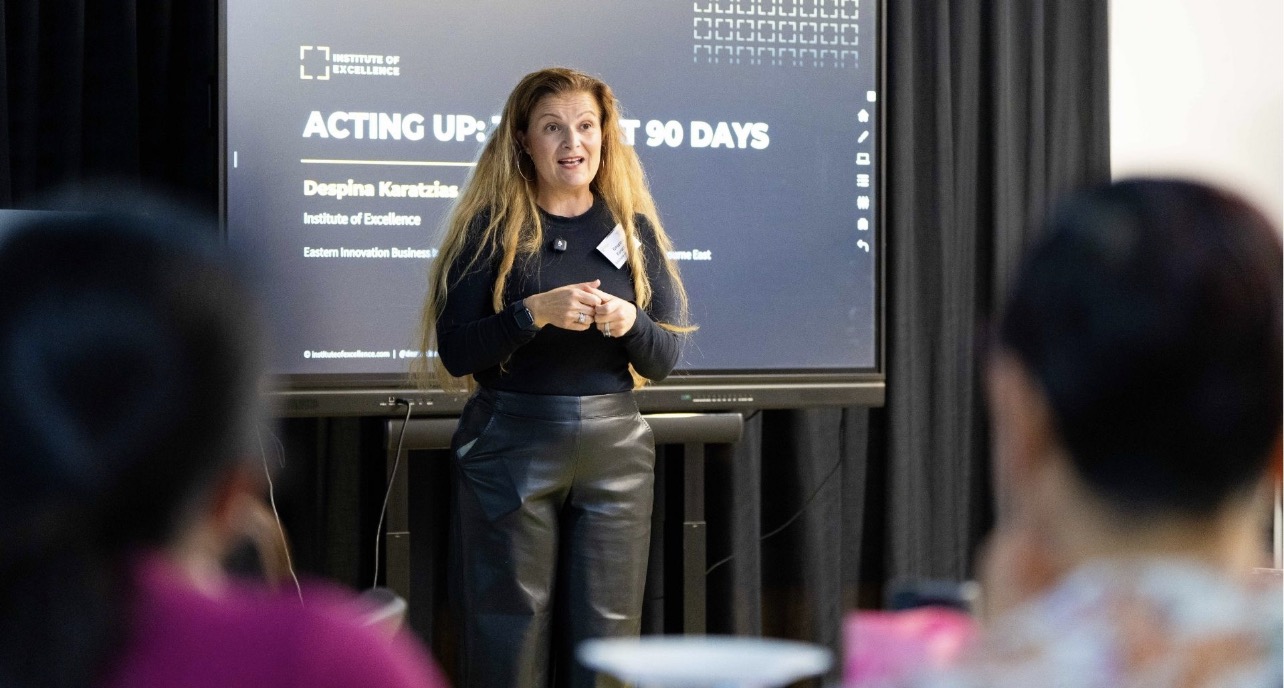
Despina Karatzias is the founder of the Institute of Excellence and a transformative leader in Australia’s tourism and small business sectors. A certified trainer, qualified business coach, host of the Tourism Hub Podcast, and author of Adventures of a Balloon Girl, she holds a Master’s in Digital and Social Media Marketing and brings over two decades of experience in digital strategy and entrepreneurial education. Recognised with the ‘Outstanding Contribution by an Individual’ award at the 2022 Victorian Tourism Awards, Despina empowers tourism operators and small business owners through practical, future-focused training in AI integration, digital marketing, customer service, visitor experience product design, and leadership development. Learn more about Despina or connect with her on LinkedIn.
References
Bai, Y., Grzeslo, J., Wang, R., Min, B., & Jayakar, K. (2019). The relationship between website accessibility and usability: An examination of U.S. county government online portals. The Electronic Journal of e-Government, 17(1), 47–62.
Domínguez Vila, T., & Darcy, S. (2025). Beyond technical website compliance: Identifying and assessing accessible tourism value chain information content on national tourism organisation websites. Tourism Management Perspectives, 55, 101332.
Fernández-Díaz, E., de Matos, N., & Correia, M. B. (2024). Accessible tourism through digital accessibility for 2030 Agenda for Sustainable Development. Are we ready for WCAG 3.0? Journal of Tourism, Sustainability and Well-being, 12(4), 299–318.
Laverick, S., & Awad, W. (2025). A step into inclusivity: Making content digitally accessible for all. Information Services and Use, 45(1–2), 23–29.
Lieke, K. (2020). Accessibility, usability and SEO: A study on social inclusiveness (Master’s thesis, Tampere University).
Lindgren, E. (2024). Accessibility redesign and its effect on purchase intent and customer experience (Master’s thesis, Umeå University).
Makharashvili, T. (2025). Brief: Challenges in inclusive tourism.
Mohiuddin, M. G. (2024). SEO and digital marketing strategies, trends, and impacts on online visibility. In Digital marketing: Its impact on HR and financial sectors (pp. 1–16).