The One-Page Business Plan, How to Get Clear on Where Your Business Is Going
At the start of most of my workshops I ask who has a written business plan. In a room of twenty, maybe one hand goes up. Not because people do not care, but because the format was built for banks. Here is a one-page business plan for small business owners that takes 90 minutes.
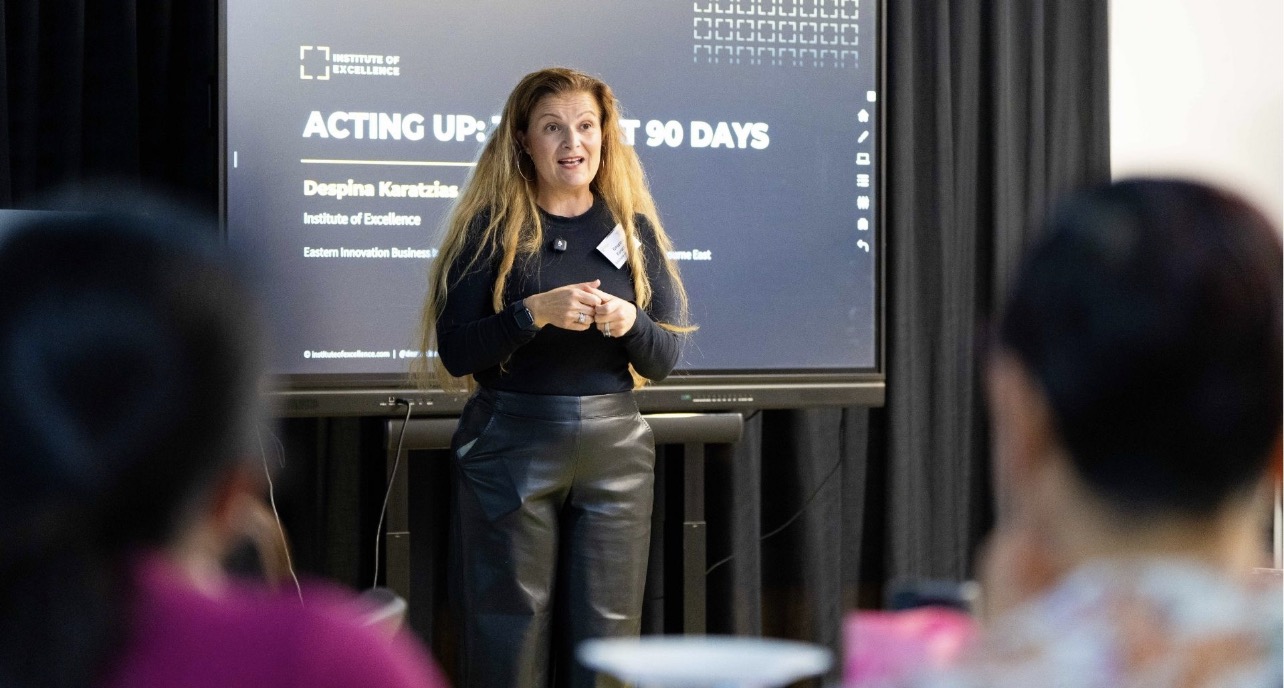
I run workshops for small business owners across Australia. At the start of most sessions, I ask the room a simple question: who here has a written business plan?
In a room of twenty people, maybe one puts their hand up. Sometimes none.
That is not a room full of people who do not care about their business. It is a room full of people who care deeply and are running flat out. Time gets in the way. Knowing where to start gets in the way. And the traditional business plan format was built for banks and investors. Many are large document templates that create more overwhelm than usefulness.
The detailed government template at business.gov.au is designed to show a lender or an investor that the business is in strong financial shape. That is a completely different job to what most small business owners actually need, which is a clear picture of where the business is going and how to make good decisions when things get busy, or hard, or both.
If the format was designed for someone else, it makes sense that you never finished it.
A one-page business plan is a working tool for the person running the business. It has eight sections, takes about 90 minutes to complete, and is useful from day one. This post walks through every section with a worked example so you can see exactly what a finished plan looks like before you write your own.
Download the free IOE business plan guide
In This Post
- What a one-page business plan actually is
- What goes in a one-page business plan
- How to fill in each section
- What the evidence says about planning and business performance
- What to do with the plan once it is written
- Using AI to work with this plan
- Common mistakes in the first plan
- Frequently asked questions
What a One-Page Business Plan Actually Is
A one-page business plan is a single-page document that captures the most important things about where your business is going and what it is focused on this year. It is not a strategy deck, a financial model, or a document for anyone else. It is a working reference you return to when a decision needs making, when a new opportunity appears, or when the week gets away from you and you need to remember what actually matters.
The ABS found that in 2024-25, only 26% of Australian businesses reviewed their business model, down from 30% in 2022-23, though the ABS notes caution is advised when comparing across survey cycles given methodology changes in that period. In the same year, just one in ten Australian businesses actively collected or analysed data to make informed decisions. Most are operating on instinct and habit, in a year when 42% reported that uncertainty about economic conditions significantly hampered their general business activity.
A written plan does not remove uncertainty. It gives you a stable reference point so that when uncertainty arrives, you are not starting from scratch.
What Goes in a One-Page Business Plan
Eight sections. Each one does a specific job. Together they give you a complete picture of the business: its purpose, its direction, its priorities, its customers, its partnerships, its income, and its biggest obstacle.
- Purpose, your why. The reason your business exists beyond making money.
- Business in one sentence. What you do, who you do it for, and what it gives them.
- Three-year goal. One specific destination, concrete enough to know when you have arrived.
- This year’s Big Rocks. The two or three outcomes that matter most this year.
- Target customer. Who you are specifically trying to serve.
- Ideal partnerships and collaborations. Who you want to build relationships with and why.
- How we make money. Your income streams and what the split tells you.
- The one thing that could get in the way. Your biggest risk or obstacle, named plainly.
The sections are ordered deliberately. Purpose comes first because it shapes everything that follows. The three-year goal comes before this year’s priorities because you cannot choose the right priorities without knowing what you are building toward. The obstacle comes last because you cannot name it honestly until everything else is on the page.
How to Fill In Each Section
Section 1, Purpose and Your Why
This is the section most people write last, even though it appears first. And when they finally write it, many are surprised by how hard it is.
In my workshops, I use a formula drawn from Simon Sinek’s approach to purpose, as taught in his Start With Why work and his Find Your WHY program. Sinek’s research into what makes leaders and organisations communicate clearly found that the most effective ones do not start by describing what they do. They start with why they do it. The formula, applied to small business, is:
I exist to [contribution] so that [impact].
When business owners write this sentence for the first time, they struggle. Not because they do not know their business. Because it is often the first time they have stopped to articulate the contribution they are making and the impact they are trying to have. Getting this on paper changes how the rest of the plan feels. It is not a marketing exercise. It is a clarity exercise.
Here is how I apply it to my own business:
The Institute of Excellence exists to give you, the small business and tourism operator practical training and mentoring that meets you where you are, so that you can run your business, and your life, with more skill, more confidence, and more you.
Once you have this written, hold every section that follows up against it. If the business you are describing does not deliver on this purpose, you have found your first problem to solve.
Section 2, Business in One Sentence
Describe your business in one plain sentence that a stranger would understand immediately. Not your tagline. Not your values statement. What you do, who you do it for, and what it gives them.
Here is mine:
IOE is the school for business and tourism greatness.
If your one sentence runs to three sentences, you are either describing multiple businesses or you have not yet made the decisions that would make it one. Keep tightening until it holds.
I will show you my own purpose and how I describe IOE. For the financial and operational sections, I will walk you through an example based on what I see consistently from the businesses I work with. I am using a hamper business because I know this one well. I ran one myself in my twenties, alongside a full-time job. The business was called Basket Treats.
Section 3, Three-Year Goal
Where do you want this business to be in three years? Pick one specific destination. Revenue, team size, market position, number of locations. Make it concrete enough that you will know when you have arrived.
A practical tip: write this section before you write your purpose statement, even though purpose appears first on the page. Once you have a three-year goal written down, every other section becomes easier to fill in because each one is just answering: what does a business that reaches this goal look like?
Basket Treats example:
Basket Treats becomes the go-to corporate gifting partner for real estate agencies across the region, with a product range that ships nationally, a catalogue that goes out every year without fail, and enough Christmas trade to carry us through the quieter months.
Section 4, This Year’s Big Rocks
The term Big Rocks comes from a concept popularised by Stephen Covey in First Things First (Covey, Merrill and Merrill, Simon & Schuster, 1994). Covey relays an account from an associate who once demonstrated this in a seminar: a jar, some large rocks, smaller pebbles, and sand. Fill the jar with sand first, and the big rocks will not fit. Place the big rocks in first, and the sand and pebbles settle in around them.
The point is about sequencing, not time management. If you do not decide what your most important priorities are before the week begins, the small things fill every available space and the things that actually move the business forward never get done.
Your Big Rocks for this year are the two or three outcomes that, if achieved, would move the business closest to your three-year goal. They are not tasks. They are results, specific enough that you will know when they are done, and large enough to require months of sustained effort.
A Big Rock looks like this: Land five new corporate real estate accounts before the end of Q3 so they are in place for the Christmas gifting season.
These are not Big Rocks:
- “Update the website”: too vague, no outcome, no way to know when it is done
- “Post more on social media”: an activity, not a result
- “Improve customer service”: cannot be completed, cannot be measured
If you cannot describe what done looks like, the Big Rock is not specific enough yet.
Basket Treats example:
- Land five new corporate real estate accounts before the end of Q3 so they are in place for the Christmas gifting season.
- Launch the online store so direct orders can be placed and fulfilled without a phone call.
- Produce and distribute the annual catalogue before October so corporate clients have it before they start planning Christmas.
Section 5, Target Customer
Describe your ideal customer specifically enough that you could find ten of them this week. Include where they are, what they want, what they have already tried, and what makes them ready to buy.
“Small business owners” is not specific enough. “Female business owners in regional Victoria with a team of one to five, who do their own marketing and have been in business for at least three years” is specific enough to plan around. The more specific the description, the more useful it is for every marketing, pricing, and partnership decision that follows.
Basket Treats example:
Two distinct customers. Direct buyers: individuals purchasing gifts for birthdays, new babies, housewarmings, and special occasions, largely local, discovering us through word of mouth and the website. Corporate buyers: real estate agencies sending welcome hampers to home buyers at settlement, typically purchasing in batches of 10 to 50, repeating annually, and referring us to other agencies when we get the experience right.
Section 6, Ideal Partnerships and Collaborations
The right partnerships can open markets, reduce costs, and build credibility faster than almost anything you can do alone. This section is about being intentional. It is not just a list of businesses you would like to know. It is a clear answer to who you want to build relationships with, what you bring to those relationships, and what success looks like by the end of the year.
Think beyond referral arrangements. Consider complementary businesses who serve the same customer, industry bodies and associations, suppliers who could become advocates, and peers in adjacent markets.
Answer three questions for this section:
Who are your ideal partners? Name specific businesses, organisations, or types of businesses you want to build relationships with this year.
What do you bring to a partnership? What makes the relationship genuinely valuable for them, not just for you? Think about your customer base, your expertise, your reach, your reputation, or your capacity.
What does a successful partnership look like for you this year? A number, a type of activity, a specific outcome.
Basket Treats example:
Ideal partners: Local producers, including preserves, chocolates, candles, and artisan food makers whose products fill the hampers and whose story adds value to ours. Real estate agency principals who can refer us across their network. A local gift wrapping or packaging supplier who can scale with us at Christmas.
What we bring: A guaranteed volume order for producers, especially in the lead-up to Christmas. Visibility in the catalogue and on the website. A relationship built on reliability and quality.
What success looks like this year: Three local producers supplying to Basket Treats for the Christmas range, with their story featured in the catalogue. One real estate network principal who refers us to two other agencies.
Section 7, How We Make Money
List every way your business generates revenue. Then use the formula below to work out what percentage of your total income each stream represents.
Use last year’s actuals if you have them, or your best honest estimate if you do not. This tells you where your business actually lives, which is often different from where you think it does.
The formula: Stream revenue divided by total revenue, multiplied by 100, equals percentage of revenue.
Basket Treats example:
Total annual revenue: $70,000
| Income stream | Annual revenue | % of total |
|---|---|---|
| Corporate gifting, real estate agencies | $42,000 | 60% |
| Direct online orders | $21,000 | 30% |
| Catalogue orders | $7,000 | 10% |
| Total | $70,000 | 100% |
Once you have the split, answer two questions.
Which stream has the highest margin? Margin is revenue from that stream minus its direct costs, not just the highest dollar figure. For Basket Treats, corporate gifting had the highest margin. Order sizes were larger, products were consistent, and once the relationship was established the repeat rate was high with almost no additional marketing cost.
Which stream would you grow if you could only grow one? For Basket Treats, the answer was also corporate gifting. One new agency account was worth more than a full month of direct online orders, and a good experience generated referrals without additional effort.
The percentage split shows where the money comes from today. The margin and growth questions show where the strategy should point. All three together often reveal a gap between where the business lives now and where you actually want it to go.
Section 8, The One Thing That Could Get in the Way
Name your biggest risk, gap, or obstacle for this year. Be honest and specific. You cannot solve a problem you will not write down.
In my workshops, when small business owners reach this section, the most common answer is time and resources. Everyone is busy. Everyone is stretched, balancing business and family responsibilities. That is real and it belongs on the page. But the most useful answer goes one level deeper than “I am busy.” It names the specific thing, in this business, right now, that is most likely to stop the plan from working.
This is the section most people leave blank. It is also often the most valuable one on the page.
Basket Treats example:
Everything depends on Christmas. If something goes wrong in November or December, a supplier lets us down, the catalogue is late, an order is delayed, there is no buffer. The business does not have enough spread across the year to absorb a bad peak season.
What the Evidence Says About Planning and Business Performance
Research by the Australian Centre for Business Growth at the University of South Australia drew on data from 650 CEOs of small and medium companies. Of those 650, 134 had experienced a business failure. Those 134 CEOs gave 253 reasons for the failure between them. Of those 253 reasons, 25% related to lack of leadership, poor management, and no planning, making it the most-cited single category. Not bad luck. Not market conditions. Not competition. No plan.
This is foundational research from 2018 and it remains the most specific Australian evidence available on this question. No nationally representative statistic exists for what percentage of Australian small businesses currently have a written plan. What we know from practice, and from the South Australian Government’s Small Business Engagement Report 2024-25, which engaged around 300 small businesses, is that formal business plans are genuinely rare.
The operating environment makes this more consequential than ever. In 2025, 46% of Australian small businesses reported growth, up from 42% in 2024. That improvement is real, but Australia was still the least optimistic market across all 11 Asia-Pacific economies in CPA Australia’s survey of 4,166 small businesses. More Australian businesses expected the economy to contract than to expand. In that context, running without a clear direction is not a neutral position. Reactive decision-making is more costly when the margin for error is smaller.
What to Do With the Plan Once It Is Written
Writing the plan is the first step. Using it is the whole point.
Save the file with your business name. Before you close this document, rename it. Something like: Coastal Adventures Business Plan 2026.docx. This is your document now. It should feel like yours.
Print page 1 and put it somewhere visible. Not filed on your computer. On the wall above your desk, pinned to your noticeboard, or inside the folder you open every week. A plan that is filed away is not a plan. It is a document.
Share it with at least one other person. A business partner, a team member, a mentor, or an accountant. Sharing creates accountability. It also means someone else can flag when a new decision does not fit the plan.
Book your four 90-day review dates before you close this document. Put them in your calendar now. Each review is 30 minutes. Use these three questions:
- What has progressed? Which Big Rocks have moved forward? What has changed in the business since the last review?
- What has stalled? Which priorities lost momentum? What got in the way, and was it the obstacle you named in Section 8?
- What needs to change? Update your Big Rocks if needed. Update your obstacle. Rewrite any section that no longer reflects the real business.
The plan is not a contract. It is a guide. Update it when the business changes.
Use it to make decisions. The plan’s most practical job is helping you say no. When a new opportunity appears, ask one question before you say yes: does this move me toward my three-year goal? If not, it goes in the ideas folder, not the calendar.
Using AI to Work With This Plan
AI tools like Claude or ChatGPT can help you use this plan actively rather than leaving it untouched between reviews. Paste your completed plan into the tool and use these prompts. The more specific your plan, the more useful the response.
Before you share your plan with any AI tool, read this first
Most mainstream AI tools, including Claude and ChatGPT, use your conversations to train their models unless you actively turn this off. This is a setting you need to change. It is not a default protection.
To turn off model training: in Claude, go to Settings, then Privacy, and turn off “Use my conversations to improve Claude.” In ChatGPT, go to Settings, then Data Controls, and turn off “Improve the model for everyone.”
Use descriptive placeholders rather than actual client names or sensitive financial figures. For example, write “our largest client” rather than the client’s actual name, and “our main revenue stream” rather than a specific dollar figure. If your business operates under specific confidentiality obligations, including legal, medical, financial services, or government contracts, check with your professional body before sharing any business information with an AI platform.
Turning off model training does not affect how the tool performs. It simply means your conversation is not used as training data.
Quarterly review prompt
“Here is my one-page business plan. Ask me one question at a time about each section, what has progressed, what has stalled, and what has changed. Once we have been through every section, summarise what I should carry forward, what I should update, and what I should stop doing.”
Decision filter prompt
“Here is my one-page business plan. I am considering [describe the opportunity]. Based on my three-year goal and this year’s Big Rocks, help me evaluate whether this is worth pursuing and what questions I should ask before I commit.”
Purpose stress-test prompt
“Here is my purpose statement and a brief description of how my business currently operates. Does my current business model actually deliver on this purpose? Where is the gap between what I say I exist to do and what the business is set up to do?”
Partnership prompt
“Here is my business plan, including my target customer and current income streams. Suggest five types of businesses or organisations I should consider as partnership targets this year, explain what I bring to each relationship, and describe what a successful first-year partnership could look like.”
Common Mistakes in the First Plan
Writing for the bank manager, not yourself. The most common mistake is writing in language designed to impress someone else rather than language that is actually useful to the person running the business. Write the version you would explain to a peer over coffee, not the version you would hand to a lender.
Big Rocks that are too vague. “Grow revenue” is not a Big Rock. “Secure three new corporate clients at a fee of $8,000 each before the end of Q2” is a Big Rock. If you cannot describe what done looks like, it needs to be more specific.
Treating the plan as a one-off. The plan is only valuable if you return to it. Book the four quarterly review dates before you close this document.
Never sharing it. A plan that exists only on your hard drive provides no accountability. Share it with at least one person who will notice if you stray from it.
Waiting until it is perfect. A rough plan that exists is more useful than a perfect plan that does not. Version one does not need to be final. You will update it.
Frequently Asked Questions
What is a one-page business plan?
A one-page business plan is a single-page document that captures where your business is going and what it is focused on this year. It replaces the traditional multi-page format, which was designed for banks and investors, with a practical working tool designed for the person running the business.
What goes in a one-page business plan?
Eight sections: your purpose, your business in one sentence, your three-year goal, this year’s Big Rocks, your target customer, your ideal partnerships and collaborations, how you make money, and the one thing most likely to get in the way.
How do I write a purpose statement for my business?
Use this formula, drawn from Simon Sinek’s Start With Why work: I exist to [contribution] so that [impact]. Write the full sentence in plain language. Hold your current business model up against it. If the business does not deliver on the purpose, that gap is your first problem to address.
What are Big Rocks in business planning?
Big Rocks are your most important annual priorities, the two or three outcomes that, if achieved this year, would move the business closest to your three-year goal. The concept was popularised by Stephen Covey in First Things First (Covey, Merrill and Merrill, Simon & Schuster, 1994). If you do not place your most important priorities first, everything else fills the available space.
Do I need a full business plan before using a one-page version?
No. The one-page plan is the right starting point, not a shortcut to a longer document. Many small business owners never need the longer version. If you reach a point where you are applying for significant funding or bringing on a major business partner, you can build more detail at that stage.
How often should I review my business plan?
Every 90 days for a structured check-in, and once a year for a full update. If something major changes, a key team member leaves, a new market opens, or revenue drops sharply, update it sooner. The plan is a guide, not a contract.
What is the difference between a one-page plan and a business strategy?
A plan captures where you are going and what you will focus on. A strategy is the set of choices about how to get there: which customers to serve, which markets to enter, which capabilities to build. The one-page plan covers both in practical terms without getting lost in theory.
If you want to go deeper on the strategy side, this guide on strategic planning with examples covers why plans stall after the workshop and how to design execution so they do not.
What if I do not know what my three-year goal is?
Write down three different versions of where the business could be, different sizes, different shapes, different priorities. Choose the version that feels most honest and use that as your working goal. A working goal is more useful than no goal. You can update it.
Is there a free one-page business plan template in Australia?
Yes. The IOE business plan guide is free to download and includes the full eight-section plan with instructions and worked examples, plus a resource guide with the Big Rocks explainer, the 90-day review structure, the decision filter, and AI prompts for ongoing use.
Download the IOE business plan guide
If your business is in Greater Geelong
Applications are open for the Geelong Business IGNITE Program, delivered by the Institute of Excellence and fully subsidised by the City of Greater Geelong.
The one-page plan is where we start. Over seven months you work through all six IGNITE pillars, one per session, with 1:1 coaching alongside. Intelligence is the November session, and it opens with exactly this work: purpose, three-year goal, Big Rocks, and the section most people leave blank.
Three live workshops and three virtual sessions, November to May. Expressions of interest close COB Monday 5 October 2026.
Not sure where your business actually stands, not just the plan?
The IOE IGNITE Business Audit scores your business across six pillars: Intelligence, Growth, Nurture, Income, Transformation, and Empower.
The Intelligence pillar is the one this post speaks to. It looks at whether your business has a clear direction, a working plan, and the market awareness to stay ahead. Your one-page plan is a strong start. The audit shows you the full picture.
The audit takes 15 minutes. You get a score across every pillar, a clear picture of where the gaps are, and a link to book a discovery session if you want to talk through your results.
Take the IGNITE Audit at audit.instituteofexcellence.com
About the Author
Despina Karatzias, Founder and Facilitator, Institute of Excellence
Despina Karatzias is the founder of the Institute of Excellence, a training and education organisation working with small business owners and tourism operators across Australia. She holds a Master’s in Digital and Social Media Marketing and has more than two decades of experience in business operations, digital strategy, and entrepreneurial education. She is a certified trainer, qualified business coach, and host of the Tourism Hub Podcast. Find out more at instituteofexcellence.com.
Sources
- Australian Centre for Business Growth, University of South Australia. New Study Reveals Why Australian SMEs Fail. 20 November 2018. centreforbusinessgrowth.com
- Australian Bureau of Statistics. Characteristics of Australian Business, 2024-25 financial year. Released 25 June 2026. abs.gov.au
- Australian Small Business and Family Enterprise Ombudsman. Number of Small Businesses in Australia. Data from ABS Counts of Australian Businesses, August 2025. asbfeo.gov.au
- CPA Australia. CPA Australia survey shows Aussie small businesses falling behind Asia-Pacific peers as productivity crisis deepens. 2 April 2026. cpaaustralia.com.au
- CPA Australia. Asia-Pacific Small Business Survey 2025-26, Australia market summary. cpaaustralia.com.au
- South Australian Government. Small Business Engagement Report 2024-25. business.sa.gov.au
- Simon Sinek. Start With Why: How Great Leaders Inspire Everyone to Take Action. Portfolio/Penguin, 2009. ISBN 978-1-59184-280-4.
- Simon Sinek. How great leaders inspire action. TED Talk, TEDxPuget Sound, September 2009. ted.com
- Stephen R. Covey, A. Roger Merrill and Rebecca R. Merrill. First Things First. Simon & Schuster, 1994. ISBN 0-671-86441-6.
- Australian Government. Business plans. business.gov.au
Share